- the Procurement Blueprint
- Posts
- Mind the gap(s)
Mind the gap(s)
The Procurement Blueprint - Issue #13
In partnership with

HEY AGAINThis week I’ve been thinking a lot about the things that slow procurement down.Things which nothing to do with our skill, effort, or capability and live beneath the surface. And the more time I spend inside different organisations, the more I realise the same pattern repeats everywhere: we keep trying to transform procurement on top of foundations that were never designed to carry the weight. So this issue is about both kinds of debt: the cultural behaviour everyone steps around, and the technical decisions nobody claims ownership of even though procurement ends up living with the consequences. Neither one is glamorous nor solved by a roadmap but both shape our work better than any strategies ever will. If anything here feels uncomfortably or hugely familiar, that’s sort of the point. |  |
In Today's Issue
The Gold standard for AI news

AI will eliminate 300 million jobs in the next 5 years.
Yours doesn't have to be one of them.
Here's how to future-proof your career:
Join the Superhuman AI newsletter - read by 1M+ professionals
Learn AI skills in 3 mins a day
Become the AI expert on your team
The Quiet Fix

CULTURAL DEBT
I usually use this part of the newsletter to call out something in procurement that’s gone a bit crooked and then offer two or three easy unglamorous fixes which you can implement without budget or fanfare.
And I tried to do that again here, I really did.
But every time I sat down to write the “solutions,” I realised I didn’t have any that felt truly honest. And it wasn’t because the problem can’t be fixed, I promise you it honestly can.
But because the people who need to fix it rarely think the problem belongs to them. So this time, I am offering no cure-all remedy.
Just the truth.
What Cultural Debt Actually Is
Cultural debt is the behavioural residue an organisation accumulates over years of shortcuts, favours, personal politics and unchallenged habits….
If you understand how IT has technical debt, procurement equally develops cultural debt, which is the backlog of inherited behaviour that quietly undermines every sourcing plan, governance model and strategy deck before we have even had a chance to start our work.
Technical debt slows systems and cultural debt slows people.
A Small Moment That Says Everything
I saw it a while back in a meeting that should have been really short and simple and a category we had sourced a hundred times with sensible next steps and agreement all round.
And then, after the meeting, my main stakeholder casually mentioned that they’d already “had a chat” with a supplier because “it’s just easier that way.”
This wan’t at all intended to be malicious. They were just familiar. A single sentence that erased my entire process.
And that’s the thing about cultural debt, that it always looks small in the moment and only when you zoom out is that you see the pattern.
Where Cultural Debt Lives
You can see it in the “my supplier” culture, where relationships become untouchable relics, protected not because they deliver value but because they’ve always been there, like inherited crockery no one actually likes but no one dares throw away.
You also see it in senior leaders who treat governance as optional for themselves but essential for everyone else. I have had a couple of those in my 20 or so year long career.
You see it in invented urgency with frantic emails, dramatic deadlines… only for everything to go silent after procurement delivers, revealing that the panic was never real but simply a tool to control our pace.
In budget holders who insist they want competition but mysteriously rewrite the brief until only one supplier qualifies, as if objectivity were an inconvenience rather than a requirement.
You see it in the quiet fear embedded in teams who’ve been trained not to challenge stakeholders because the organisation has taught them (and done so subtly and consistently) that compliance is safer than integrity.
And also in the executive who still believes procurement’s value begins and ends with savings, ignoring every risk avoided, every crisis prevented, every mess handled before it ever reached their desk.
Our Side of the Story
And yes, procurement creates its share of cultural debt too, of course we do.
With outdated templates no one questions, internal jargon that obscures instead of clarifying, reluctance to redesign processes that stopped serving their purpose years ago...
No one is innocent here but some behaviours carry far more weight than others, and procurement feels that weight more than most because we sit at the crossroads of every cultural quirk the organisation has normalised.
The Fix That Costs Nothing (Which Is Why It Never Happens)
The maddening thing is that cultural debt is FREE to fix!!
It costs nothing to tell someone that the process isn’t decorative.
Nothing to insist that approvals mean something.
Nothing to stop protecting suppliers out of habit.
Nothing to choose transparency over convenience.
Nothing to document knowledge instead of hoarding it.
Nothing to say, plainly, “We can’t keep doing it this way.”
But organisations will invest in software, consultants, roadmaps and scorecards long before they touch our human habits that make all of those things pointless.
So Where Does That Leave Us?
So no this isn’t a Quiet Fix that ends with a tidy solution. The fix exists. It’s just not easy to implement.
Which is why cultural debt keeps accumulating, quietly, in the background, shaping outcomes far more than any system ever will.
Cultural debt is free to fix.
And the fact it still isn’t tells you exactly how expensive it has become.
The Tech Bit

THIS IS ALSO OUR PROBLEM
Writing about cultural debt always makes me think about the other kind of debt nobody wants to claim ownership of.
The type that sits in the gaps between the systems people think they have and the ones they actually use.
Cultural debt slows people so technical debt slows everything those people touch.
And you may disagree with me but procurement feels both, intensely, because we sit in the part of the organisation where old decisions accumulate and quietly shape all the new ones.
Why Tech Debt Belongs to Us Too
We often pretend technical debt is someone else’s responsibility. We pass it on like a ball: IT’s problem, finance’s budget, the remnants of some old project…. never procurement’s fault.
But we live downstream of every technology shortcut that’s ever been taken.
Every temporary fix that became permanent. Every data structure that made sense at the time but no longer matches reality.
We inherit the fragmentation, the mismatches, the blind spots.
Technical debt looks harmless if you only see the symptoms one at a time. Things like missing cost centre, a duplicated vendor or a category structure nobody can explain.
But together they create a huge drag on the whole procurement function, especially on leaders, because we become the ones defending delays we didn’t create and firefighting issues we never had the tools to prevent.
What CPOs and Leaders Can Actually Do
Technical debt feels intimidating for us in Procurement because it sounds like a structural issue, something only engineers can fix. In reality, Procurement leaders can shift far more than they expect, mostly by simplifying expectations and refusing to add more complexity to systems that are already straining.
Here’s where I know firsthand is worth starting:
Map the real gaps, not the imagined ones
Create a simple, plain-English view of what the systems can’t support today. The actual reality.Stop customising everything!!
The quickest way to grow technical debt is to preserve legacy behaviours through exceptions. Standardisation is uncomfortable at first but liberating later.Fix the basics before anything advanced
Clean vendor master, one intake path, one approval flow. These tiny foundations create more lift than one big complex fix.Work with IT in their language
Position procurement’s needs as: fewer manual fixes, fewer breaks, fewer escalations, fewer late-night emergencies. IT listens to stability.Choose tools that reduce effort
If a platform you select needs constant manual maintenance, it’s adding to your debt.
These actions sound small, but they change the rhythm of the entire function. And then the business notices the shift long before they connect it to “tech debt.”
Why It Makes Leadership Life Easier
When technical debt lightens, everything procurement does becomes slightly less strained. Decisions land faster and reporting stops being an exercise in negotiation.
Meetings feel calmer. You spend less time validating data and more time using it. You don’t need to be loud to be effective; the systems finally support the work instead of resisting it.
And that’s usually the first sign that something underneath the surface has started to move the right way.
Personalized Onboarding for Every User
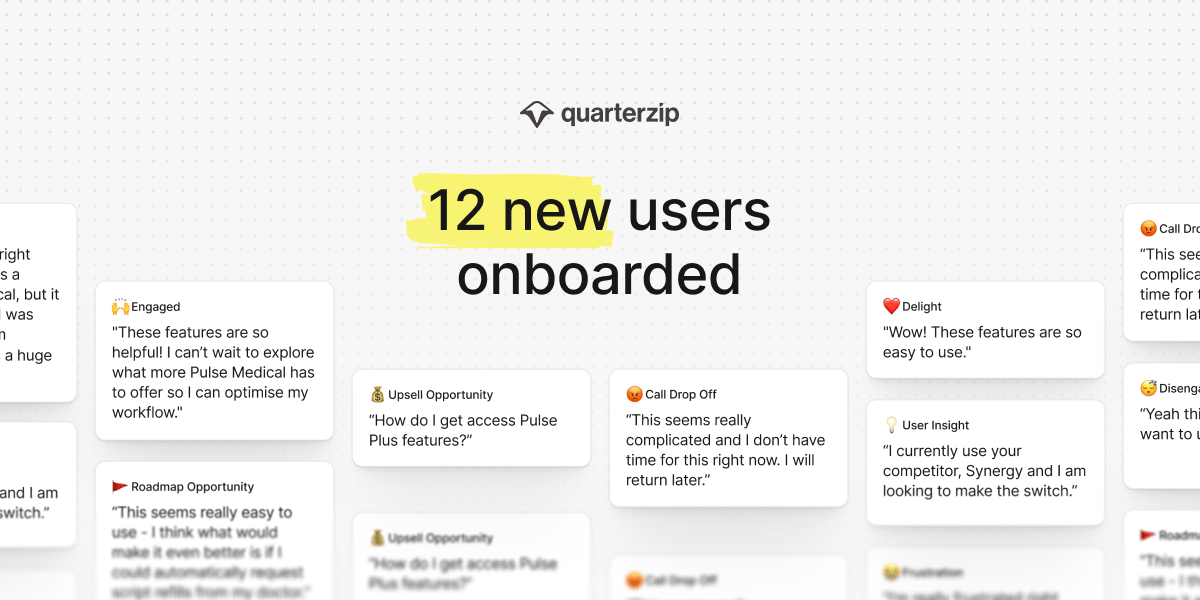
Quarterzip makes user onboarding seamless and adaptive. No code required.
✨ Analytics and insights track onboarding progress, sentiment, and revenue opportunities
✨ Branding and personalization match the assistant’s look, tone, and language to your brand.
✨ Guardrails keep things accurate with smooth handoffs if needed
Onboarding that’s personalized, measurable, and built to grow with you.
My Best Post Lately

25 TYPES OF PROCUREMENT SAVINGS
There’s a post I shared this week that stayed with me long after I hit publish because it touched the part of procurement that feels personal.
The part James Baldwin would say is “the story beneath the story”.
It was about how we’ve made this work so mechanical that we’ve forgotten the pulse behind it. How savings categories and playbooks flattened something that used to require intuition, conversation, nerve.
Writing it made me realise how much of procurement isn’t about numbers at all but helping people see the habits they’ve built around themselves and the things they protect without meaning to.
And sometimes it’s about recognising that they’re not defending a supplier but just a sense of safety.
Baldwin once said, “Not everything that is faced can be changed, but nothing can be changed until it is faced.”
I thought about that while reading the comments.
Because this post was really about facing the parts of our work that make us uneasy and the parts that reveal where comfort has been mistaken for value.
It wasn’t a human post not a viral one.
And sometimes that’s the difference that matters.
Free Template(s) of the week

MY BEST NEGOTIATION TOOLKIT
This week’s freebie is the negotiation bundle.
I think I like it so much because it covers the one area everyone pretends they’re fine with until they’re suddenly… not: the legal bits.
I don’t know a single procurement person who hasn’t had that moment where a supplier pushes back on a clause and you do the polite “yes, of course, let me check internally” while secretly thinking, “I have no idea if this is normal or if I’m being played.”
You are not incompetent if you’ve ever been there, most of us never got taught the legal side properly.
We learned by copying old contracts, asking a lawyer who was already too busy, or digging through ancient emails trying to find what “good” even looked like.
That’s really why I made this bundle.
Because I kept meeting brilliant buyers who were amazing in front of stakeholders but froze the minute a supplier said “that indemnity is too broad” or “we can’t agree to IP ownership”.
And honestly, I used to freeze too until an incredible mentor coached me on the job.
The clause library in particular is the part I wish I’d had early in my career.
And the workbook just keeps everything steady. Sometimes that’s all you need: something that stops you drifting into concessions you didn’t mean to make because the call moved too fast.
People use it differently too… junior buyers follow it closely, seasoned ones skim it for the bits they don’t deal with often, and CPOs use it as a quiet way to get their teams negotiating at a consistent standard without turning it into a training programme.
Anyway, if you’ve ever sat on a call thinking
“Wait, is that clause actually important?”
or
“I hope nobody asks me what our fallback is,”
this one will make your week a little easier.
Let it take some of the pressure off.
A Final Note
There’s a line from John Berger I came back to this week:
What seems like a wall is often a door you haven’t tried.
So much of procurement is spent staring at walls that turned out to be something else.
We spend a lot of time assuming the obstacle is fixed, permanent and structural. But most progress begins when people stop treating the barrier as absolute and nudged it, even slightly, just to see if it shifted.
It’s not grand or inspirational.
It’s the kind of small test you run on a Tuesday afternoon and then you realise the thing you thought was immovable was only that way because nobody had touched it in years.
Maybe that’s the real lesson behind both cultural debt and technical debt. They’re heavy until someone checks whether they’re still as solid as they look.
See you in two weeks with hopefully with one less “wall” in front of you, and at least one door you didn’t know you could open.
Until next time,

Procurement worth reading.